
 Free shipping on all orders above
 Only logged in customers who have purchased this product may leave a review.
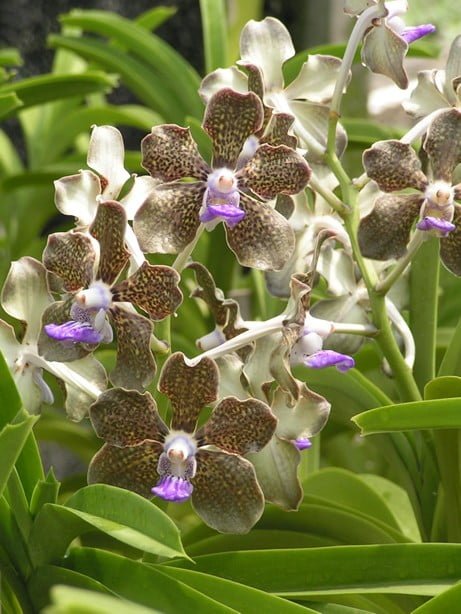
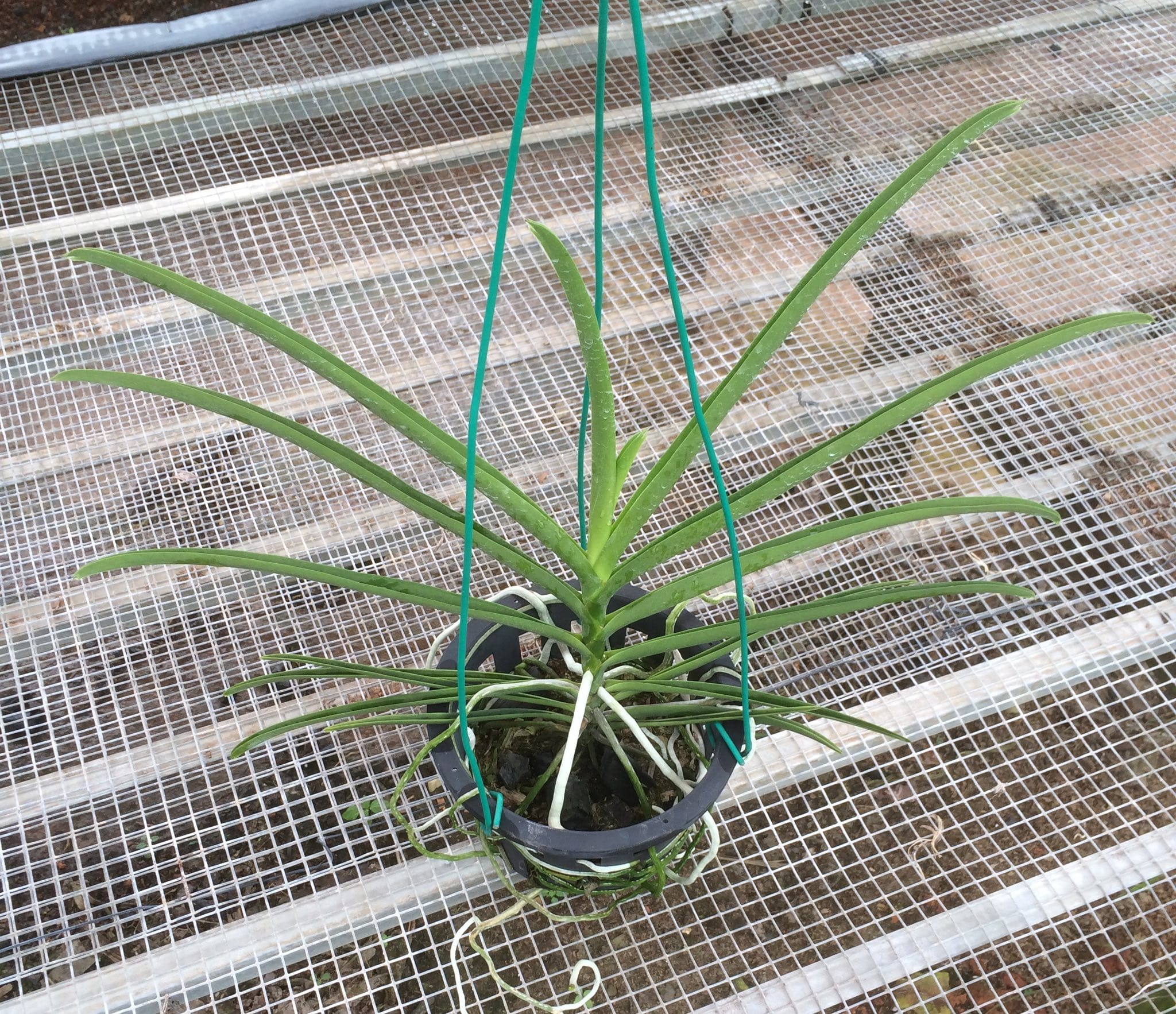
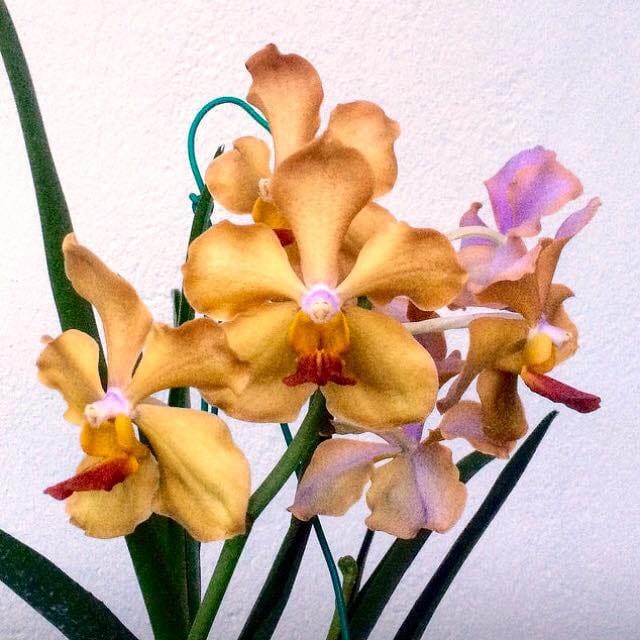
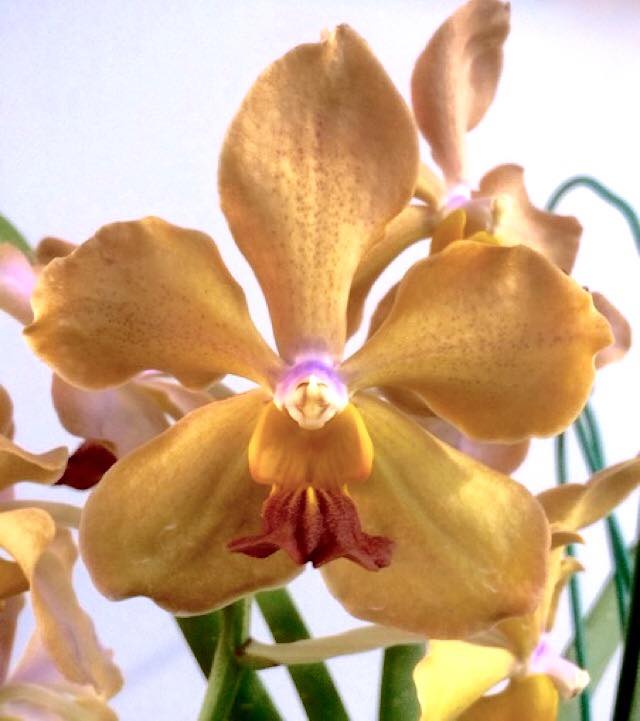
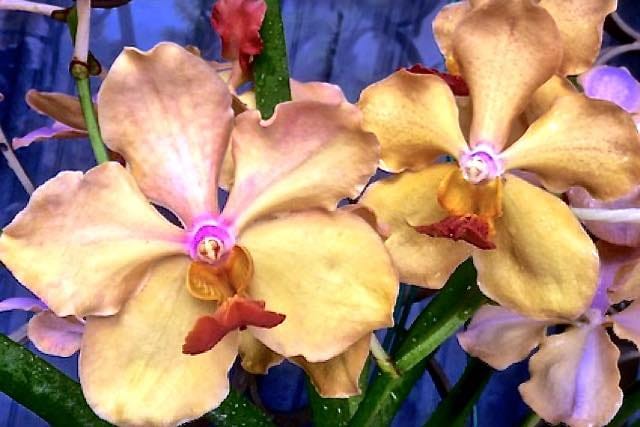
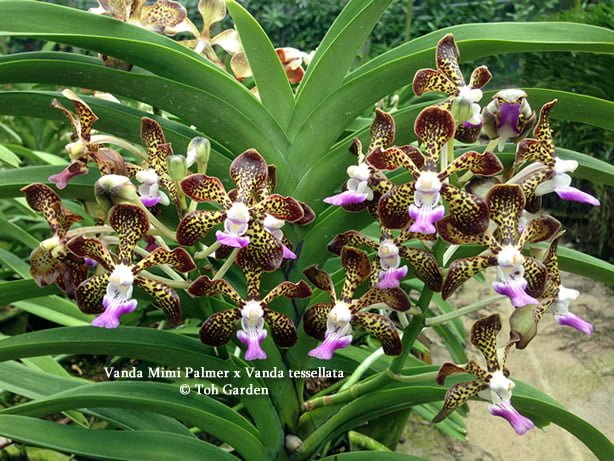
Vanda Mimi Palmer (1963)
PAPILIONANDA (VANDA) MIMI PALMER:
RESOLVING THE CONUNDRUM OF DISPUTED PARENTAGE
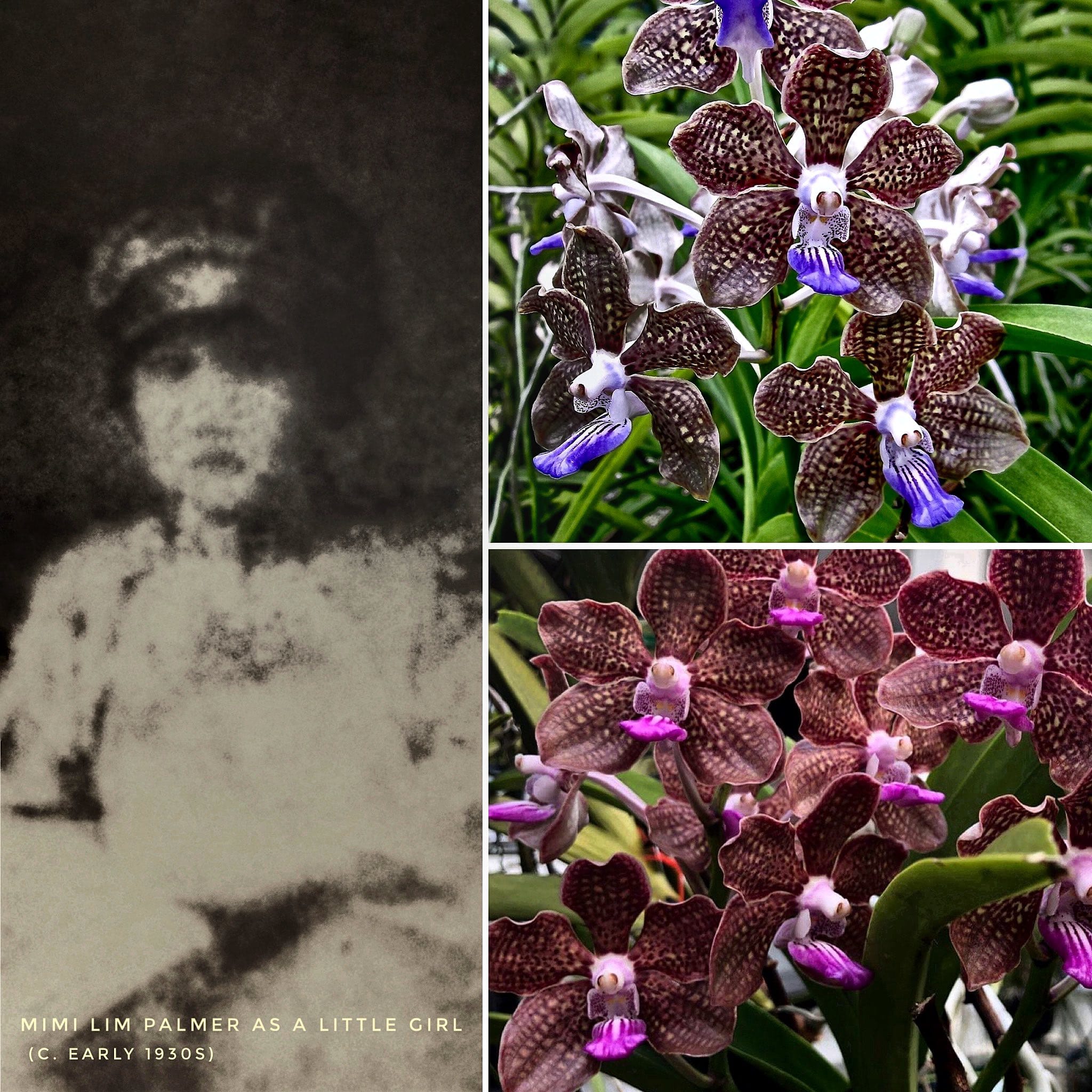
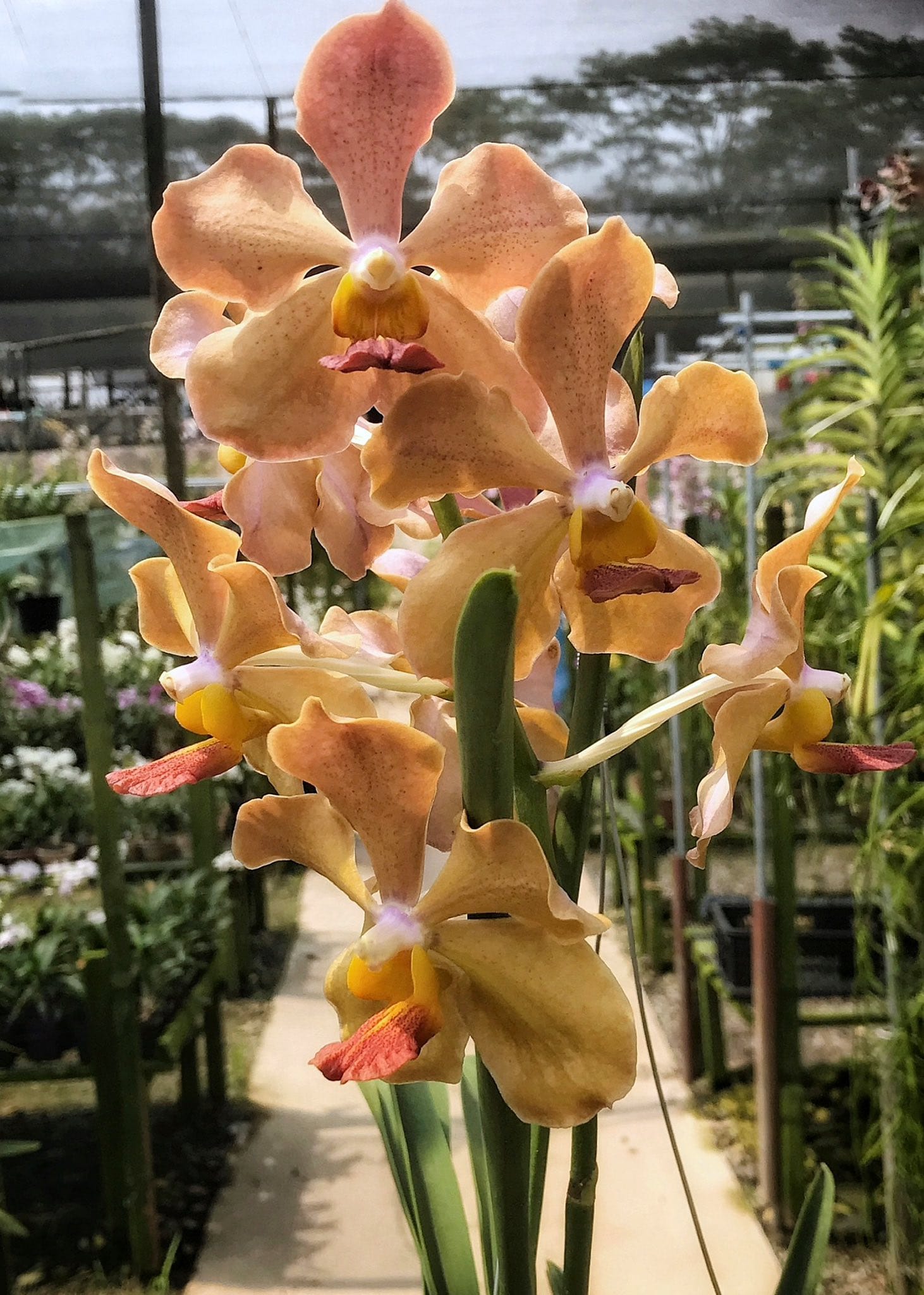
Papilionanda (Vanda) Mimi Palmer is one of Singapore’s much loved heritage orchids. Renowned worldwide for its distinctive ‘blue’ and ‘pink’ forms of sweetly scented flowers, the hybrid was registered by Gem Nursery in 1963 with its parentage given as Papilionanda Tan Chay Yan × Vanda tessellata. It is named for Mimi Lim Palmer, a local piano teacher who happened to be a granddaughter of Straits Chinese physician Dr Lim Boon Keng (Fig. 1).
Orchid growers have long disputed the registered parentage, however. The hybrid is entirely strap-leafed in plant growth habit, showing no trace whatsoever of terete influence in its leaves that one might expect if its seed parent were really Papilionanda Tan Chay Yan (3n) and seed grandparent Papilionanda Josephine van Brero (4n) — semi-terete progeny of the ancestral species Papilionanthe teres. Furthermore, as determined by Prof. Haruyuki Kamemoto the triploid seed parent Papilionanda Tan Chay Yan is severely subfertile, while the diploid Papilionanda Mimi Palmer has proven over several decades to be as fertile as its pollen parent Vanda tessellata (2n) in producing no fewer than 183 registered progeny.
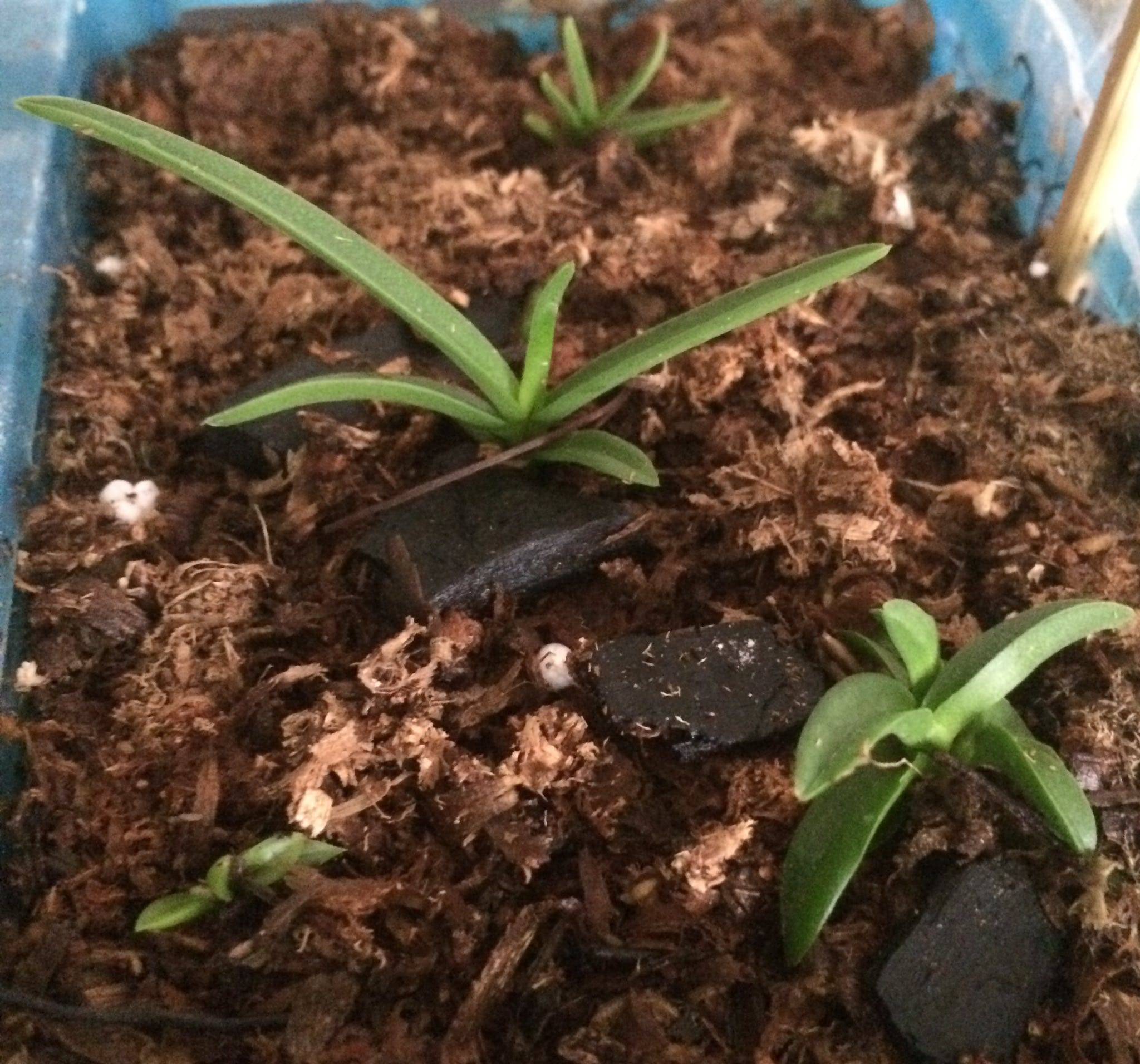
In March 2008 I repeated the cross according to its registered parentage. As one might expect from the triploid Papilionanda Tan Chay Yan, only a handful of its seedlings germinated, all of which were semi-terete in plant growth habit. Only one seedling survived to full maturity, first flowering in March 2015 with flowers similar to those of its more dominant seed parent rather than its pollen parent Vanda tessellata (Figs. 2a
to 2g).
In 2017 Dr Gillian Khew, now Centre Director Genomics and Micropropagation at Singapore Botanic Gardens, determined via DNA sequence analysis that the original Papilionanda (Vanda) Mimi Palmer possessed genetic material inherited from Vanda insignis and Vanda sanderiana but none from Papilionanthe teres, on the one hand, while on the other its seed parent was confirmed as Vanda tessellata (personal communication, 16th January 2018).
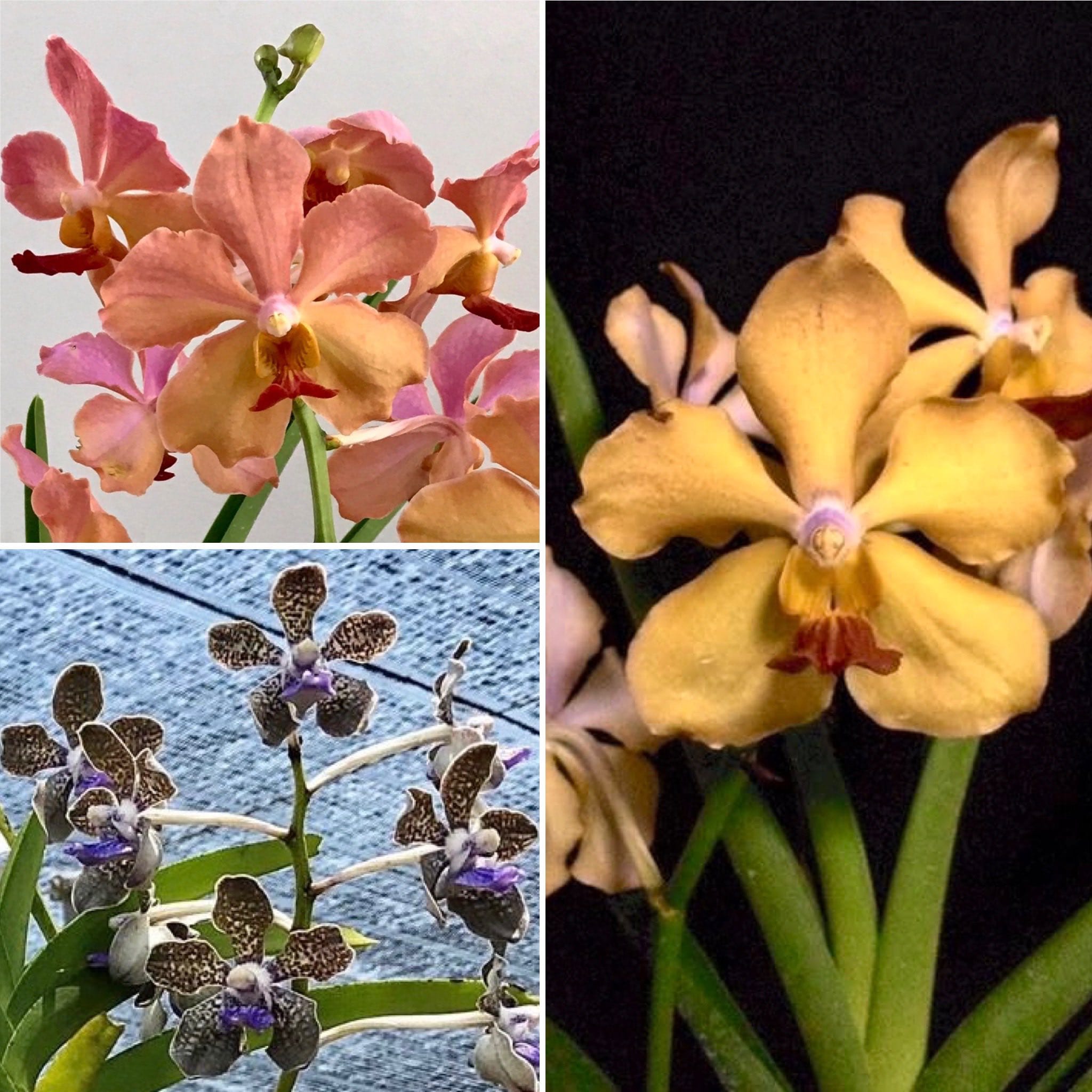
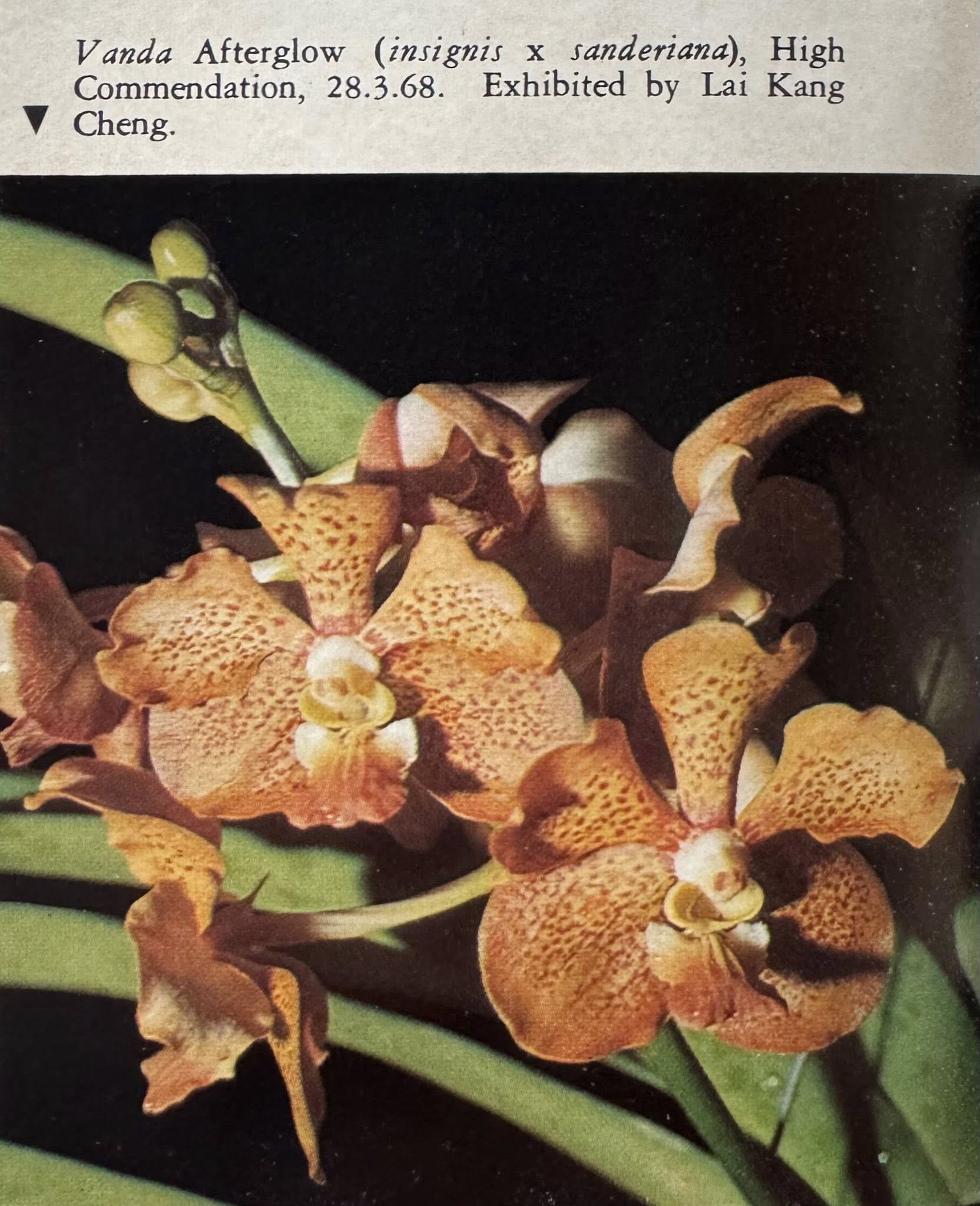
By combing through old orchid journals and nursery price-lists, I later discovered that Vanda Afterglow (Vanda insignis × Vanda sanderiana) was among the more outstanding Vanda hybrids in local circulation during the 1950s and 1960s. In the Malayan Orchid Review Vol. 9 (1968), I found a photo of an OSSEA-awarded Vanda Afterglow, with flowers of an apricot hue similar in coloration to those of Papilionanda Tan Chay Yan (Fig. 3a). It is quite conceivable that the breeder at Gem Nursery got the two hybrids mixed up, the key difference being that one is strap-leafed while the other more famous one is semi-terete!
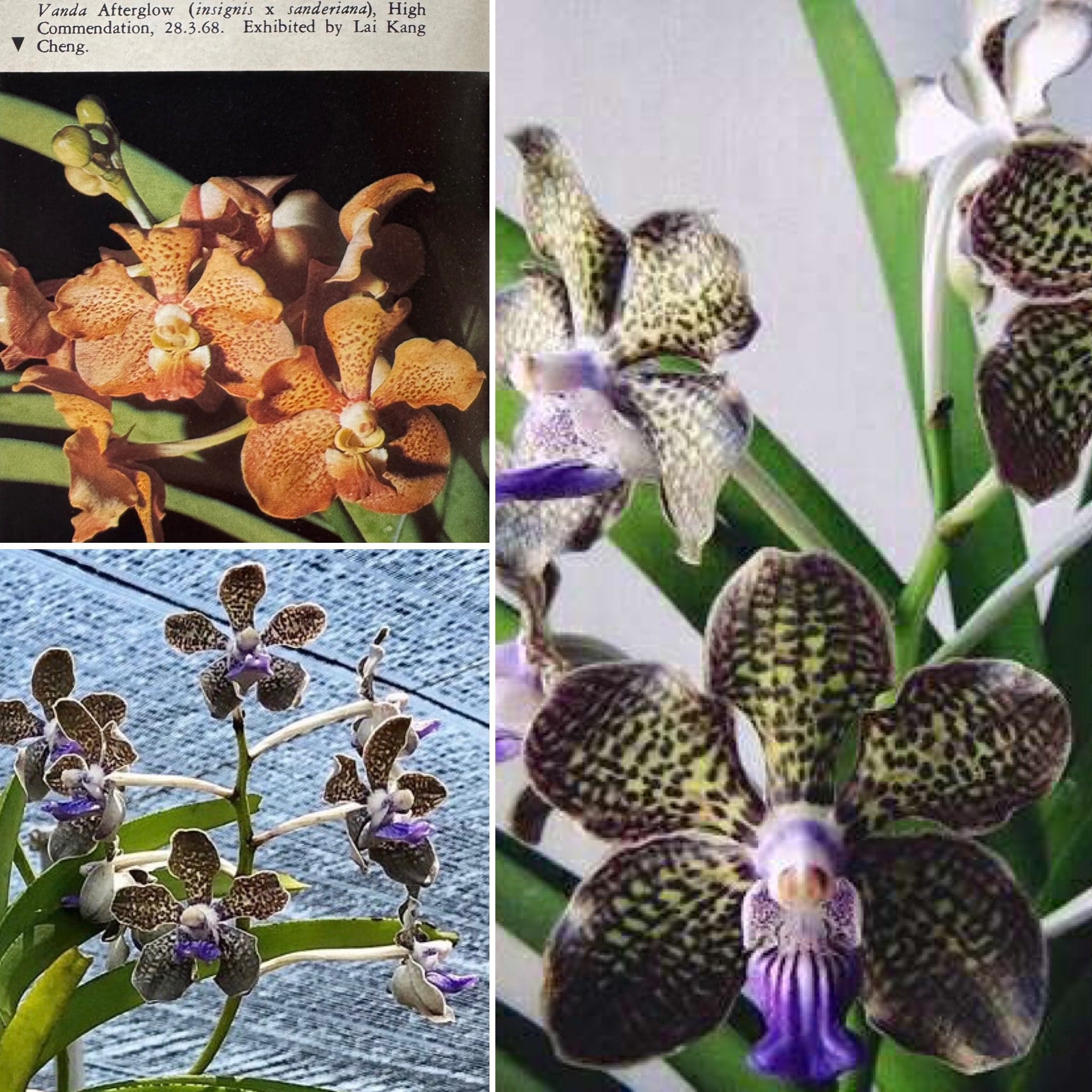
On 15th December 2025, I emailed Julian Shaw, the RHS Senior Registrar of Orchid Hybrids, proposing that the true parentage of the original Papilionanda (Vanda) Mimi Palmer should be Vanda Afterglow × Vanda tessellata (Fig. 3b). Julian replied the following day, graciously accepting my proposal and the evidence furnished in support of my conclusions.
As of 17th December 2025, the RHS has formally amended the hybrid’s parentage to Vanda Afterglow × Vanda tessellata, transferring the grex from nothogenus Papilionanda to genus Vanda. The hybrid is now named and classified as Vanda Mimi Palmer: https://apps.rhs.org.uk/…/orchidre…/orchiddetails.asp…
The names and classifications of its numerous progeny have also been revised accordingly.
– Emrys Chew
Fig. 1. Mimi Lim Palmer as a child (left) with sweetly scented ‘blue’ and ‘pink’ forms of her namesake orchid. Photo of Mimi Lim Palmer courtesy of the Lim Family Archives.
Fig. 2a. Papilionanda Mimi Palmer: my remake according to registered parentage (right); pollinated on 9th March 2008.
Fig. 2b. Papilionanda Mimi Palmer: my remake according to registered parentage; a handful of semi-terete seedlings, photographed in January 2014.
Fig. 2c. Papilionanda Mimi Palmer: my remake according to registered parentage; a precocious semi-terete seedling that proved to be the sole survivor, photographed in January 2014.
Fig. 2d. Papilionanda Mimi Palmer: my remake according to registered parentage; first flowering dated 1st March 2015
Fig. 2e. Papilionanda Mimi Palmer: my remake according to registered parentage; close-up of flower at the time of first flowering in March 2015.
Fig. 2f. Papilionanda Mimi Palmer: my remake according to registered parentage; side-by-side comparison against the flower of seed parent Pda. Tan Chay Yan (left).
Fig. 2g. Papilionanda Mimi Palmer: my remake according to registered parentage; a mature specimen in bloom on 1st September 2018.
Fig. 3a. Vanda Afterglow ‘K.C. Lai’ HCC/OSSEA, published in Malayan Orchid Review, Vol. 9 (1968).
Fig. 3b. Vanda Mimi Palmer: flowers of the original hybrid (right) compared with those of its now-accepted parents Vanda Afterglow and Vanda tessellata, according to the revised parentage.
This orchid has a distinctive Jasmine fragrance.
$35.00 $38.15 (Including GST)
Out of stock
Related products
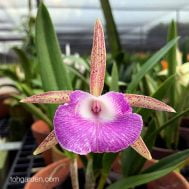
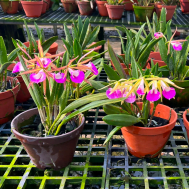
Brassocattleya Pim Little
$25.00 $27.25 (Including GST)
Dendrobium Blue Violetta x Dendrobium Burana Dark Blue
$18.00 $19.62 (Including GST)
Dendrobium Burana Jade hybrid
$20.00 $21.80 (Including GST)
Brassocattleya Rustic Spots
$30.00 $32.70 (Including GST)
Cattleya Pink Small
$25.00 $27.25 (Including GST)
Reviews
There are no reviews yet.